
Nell’arco di pochi giorni, tra il 21 e il 28 agosto 2026, Henry Threadgill ha pubblicato due dischi che, messi uno accanto all’altro, raccontano bene le due anime della sua musica: da un lato la scrittura architettonica e cameristica di Zooid, dall’altro il dialogo aperto e conversazionale di un trio nato quasi per caso quindici anni fa. A ottantadue anni compiuti, il compositore premio Pulitzer non dà alcun segno di rallentare, anzi: sembra semplicemente aver trovato il modo di far convivere due linguaggi complementari nello stesso momento della sua carriera.
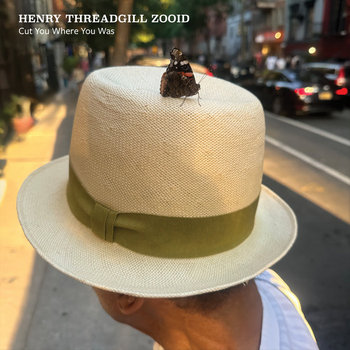
Cut You Where You Was — il ritorno di Zooid (Pi Recordings)
Zooid è il progetto più longevo di Threadgill dopo il trio Air degli anni Settanta, e con Cut You Where You Was torna in attività dopo cinque anni di silenzio discografico, l’ultimo capitolo essendo Poof del 2021. Il disco arriva anche a un traguardo simbolico: coincide con il venticinquesimo anniversario di Up Popped the Two Lips, il primissimo album pubblicato da Pi Recordings, un’etichetta nata proprio per documentare il lavoro di Threadgill.
La formazione è quella storica e ormai quasi impossibile da immaginare diversa: Liberty Ellman alla chitarra acustica, Jose Davila tra tuba e trombone, Elliot Humberto Kavee alla batteria e Christopher Hoffman al violoncello, membro del gruppo ormai da un quindicennio. Questa continuità di organico non ha prodotto abitudine, semmai il contrario: la lunga frequentazione reciproca ha dato ai musicisti la libertà di piegare le partiture di Threadgill con sempre maggiore disinvoltura, un margine di iniziativa che il leader ha sempre incoraggiato all’interno della sua scrittura.
Le dieci tracce, dall’apertura di “Fluoroscope” (dove flauto e sax si intrecciano al suono della tuba di Davila) fino alla trilogia centrale di “Bingo”, mostrano un Zooid che qualcuno ha descritto come mai stato così “sciolto” pur restando un quintetto estremamente compatto nella sua logica compositiva. È un disco che non cerca una svolta rispetto al passato, ma che dentro il linguaggio già noto di Threadgill , quella scrittura fatta di intervalli calcolati, contrappunti mobili e un’armonia che rifiuta le gerarchie tradizionali tra gli strumenti , trova ancora spazio per sorprendere. Il risultato è un ascolto che oscilla tra la ruvidezza e momenti di quiete quasi rarefatta, con una tensione che nei brani più lunghi, come “Red Admiral Red Moon Rising”, costruisce lentamente senza fretta di risolversi.
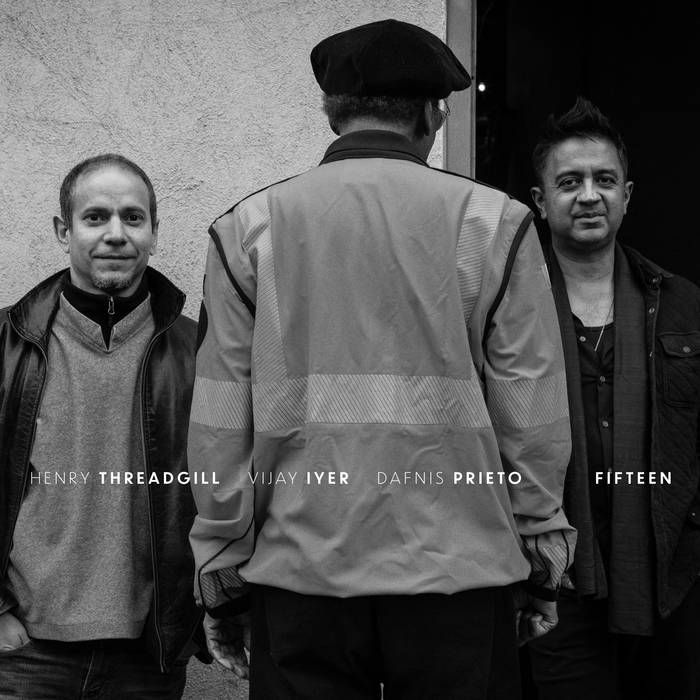
Fifteen — il trio con Vijay Iyer e Dafnis Prieto (Nonesuch)
Se Zooid è l’istituzione, Fifteen è la sorpresa più fresca dell’estate discografica di Threadgill. È il primo disco ufficiale del trio formato insieme al pianista Vijay Iyer e al batterista cubano Dafnis Prieto, un progetto collettivo, informalmente soprannominato “The Trio”, nato nel 2012 da una serie di serate benefiche per lo storico club newyorkese Jazz Gallery. Da lì il gruppo ha continuato a suonare saltuariamente, portando la propria musica anche fuori dagli Stati Uniti, fino ad arrivare, quindici anni dopo, al primo album in studio: da qui il titolo.
Il disco segna anche il debutto di tutti e tre i musicisti per Nonesuch Records ed è composto da otto brani, tre firmati insieme da Threadgill e Iyer e due da Prieto. L’organico sax/flauto, piano e batteria richiama altre esperienze trio di Iyer, in particolare con Fieldwork, ma qui l’equilibrio è diverso: Threadgill alterna sax e flauto, mentre Prieto porta dentro il gruppo la propria formazione ritmica cubana, un elemento che nel brano conclusivo “On the Way” diventa quasi il centro gravitazionale del pezzo, con un groove latino intricato su cui Iyer costruisce accordi incalzanti e Threadgill si muove libero, in brevi raffiche di sassofono di grande intensità.
Rispetto alla scrittura serrata di Zooid, Fifteen respira in modo più aperto: è musica che, pur restando riconoscibilmente “fuori” dai codici del jazz più tradizionale, non spinge fino all’estremo della libertà atonale che caratterizza altre esperienze di Threadgill in formazioni più sperimentali. È un disco in cui i tre compositori sembrano davvero dialogare da pari, ognuno portando la propria voce senza che nessuno prevalga sugli altri ,m probabilmente il frutto naturale di quindici anni di frequentazione informale prima ancora che di un disco vero e proprio.
Ascoltati in sequenza, i due album funzionano quasi come un dittico. Cut You Where You Was è la conferma di un linguaggio, portato avanti con un gruppo che lo interpreta ormai a memoria; Fifteen è invece l’istantanea di una relazione musicale che si è presa il proprio tempo prima di diventare disco, e che per questo suona meno “scritta” e più vissuta. In entrambi i casi, comunque, Threadgill dimostra che a oltre ottant’anni la sua curiosità compositiva resta intatta: non ripete se stesso, continua a porsi domande diverse a seconda dell’interlocutore che ha di fronte , che sia una band che lo segue da un quarto di secolo o due musicisti con cui condivide il palco solo da un decennio e mezzo.
Per chi si avvicina per la prima volta a Threadgill, Fifteen è probabilmente il punto d’accesso più immediato dei due; per chi invece lo segue da tempo, Cut You Where You Was è la prova che Zooid, lungi dall’aver esaurito la propria spinta, ha ancora molto da dire.
Cut You Where You Was (Zooid) — Pi Recordings, 28 agosto 2026
Fifteen (Threadgill / Iyer / Prieto) — Nonesuch Records, 21 agosto 2026

Within the span of a few days, between August 21 and 28, 2026, Henry Threadgill released two records that, placed side by side, tell us a lot about the two sides of his music: on one hand the architectural, chamber-music-like writing of Zooid, and on the other the open, conversational dialogue of a trio born almost by chance fifteen years ago. At eighty-two, the Pulitzer Prize-winning composer shows no sign of slowing down , if anything, he seems to have simply found a way to let two complementary languages coexist at the same moment in his career.
Cut You Where You Was — Zooid’s Return (Pi Recordings)
Zooid is Threadgill’s longest-running project after the Air trio from the 1970s, and with Cut You Where You Was it returns to activity after five years of studio silence, its last chapter having been Poof in 2021. The album also arrives at a symbolic milestone: it coincides with the twenty-fifth anniversary of Up Popped the Two Lips, the very first album released by Pi Recordings, a label founded specifically to document Threadgill’s work.
The lineup is the historic one, by now almost unimaginable any other way: Liberty Ellman on acoustic guitar, Jose Davila on tuba and trombone, Elliot Humberto Kavee on drums, and Christopher Hoffman on cello, a member of the group for a decade and a half now. This continuity of personnel hasn’t bred routine quite the opposite: the long familiarity between the players has given them the freedom to bend Threadgill’s scores with ever greater ease, a margin of initiative the leader has always encouraged within his writing.
The ten tracks, from the opener “Fluoroscope” (where flute and sax intertwine with Davila’s tuba) through the central three-part “Bingo” suite, show a Zooid that some have described as never having sounded so “loose,” while still remaining an extremely tight quintet in its compositional logic. This is a record that doesn’t seek a break from the past, but that within Threadgill’s already familiar language writing built on calculated intervals, mobile counterpoint, and a harmony that rejects traditional hierarchies between instruments still finds room to surprise. The result is a listen that oscillates between roughness and moments of near-rarefied calm, with a tension that, in the longer pieces like “Red Admiral Red Moon Rising,” builds slowly, in no hurry to resolve.
Fifteen — The Trio with Vijay Iyer and Dafnis Prieto (Nonesuch)
If Zooid is the institution, Fifteen is the freshest surprise of Threadgill’s summer of releases. It’s the first official record from the trio formed with pianist Vijay Iyer and Cuban drummer Dafnis Prieto, a collective project , informally nicknamed “The Trio”, born in 2012 out of a series of benefit shows for New York’s storied Jazz Gallery club. From there the group kept playing on and off, taking its music beyond the US as well, until arriving, fifteen years later, at its first studio album — hence the title.
The record also marks the label debut for all three musicians on Nonesuch, and is made up of eight tracks, three co-credited to Threadgill and Iyer and two to Prieto. The sax/flute, piano, and drums lineup recalls other trio work of Iyer’s, particularly with Fieldwork, but the balance here is different: Threadgill alternates between sax and flute, while Prieto brings his Cuban rhythmic background into the group, an element that becomes almost the gravitational center of the closing track “On the Way,” with an intricate Latin groove over which Iyer builds surging chords while Threadgill moves freely, in short, intensely powerful bursts of saxophone.
Compared to Zooid’s tight-knit writing, Fifteen breathes more openly: it’s music that, while still recognizably “outside” the codes of more traditional jazz, doesn’t push all the way to the atonal freedom that characterizes other Threadgill projects in more experimental settings. It’s a record on which the three composers really seem to converse as equals, each bringing their own voice without anyone dominating the others, probably the natural result of fifteen years of informal familiarity before it was ever a record at all.
Heard in sequence, the two albums work almost like a diptych. Cut You Where You Was is the confirmation of a language, carried forward by a group that plays it by heart at this point; Fifteen, on the other hand, is a snapshot of a musical relationship that took its own time before becoming a record, and for that reason sounds less “written” and more lived-in. In both cases, though, Threadgill proves that past eighty his compositional curiosity remains intact: he isn’t repeating himself, but keeps asking different questions depending on who he’s playing with, whether it’s a band that’s followed him for a quarter century, or two musicians he’s shared a stage with for only a decade and a half.
For anyone coming to Threadgill for the first time, Fifteen is probably the more immediate entry point of the two; for longtime listeners, Cut You Where You Was is proof that Zooid, far from having run out of momentum, still has plenty to say.
Cut You Where You Was (Zooid) — Pi Recordings, August 28, 2026
Fifteen (Threadgill / Iyer / Prieto) — Nonesuch Records, August 21, 2026
 Tracce di Jazz