
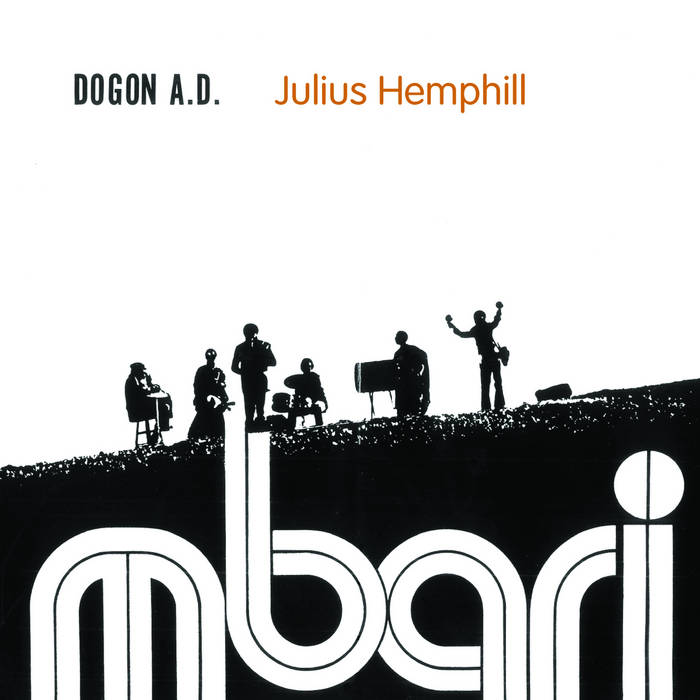
JULIUS HEMPHILL – Dogon A.D. – New World Records Supporti disponibili: CD / LP
“If I have anything to contribute to this art form . . . It’s a voice of our culture.
This is a voice right out of them cotton fields—this ain’t out of the conservatory. This is out of the neighborhood. And that’s where my impetus comes from . . . I have seen it from the bottom up.”.
Julius Hemphill
Nel pantheon del jazz d’avanguardia pochi dischi vantano l’aura di “Dogon A.D.”.
Registrato nel 1972 a St. Louis e pubblicato originariamente in poche copie per la label Mbari, il capolavoro di Julius Hemphill torna finalmente disponibile grazie ad una ristampa filologica necessaria, con sontuoso booklet correlato. Non si tratta di un’operazione nostalgia per lupi grigi, o almeno non solo!… pensiamolo piuttosto come il recupero di un album che ha contribuito a ridefinire il concetto stesso di “jazz creativo”, visto che, nel pieno della temperie free, Hemphill ebbe l’intuizione di ancorare la libertà espressiva a una pulsione ritmica ancestrale, e di fare fuoco e fiamme, quasi letteralmente. Hard Blues, per sintetizzare, come il titolo dell’ultimo brano di questa mitica session.
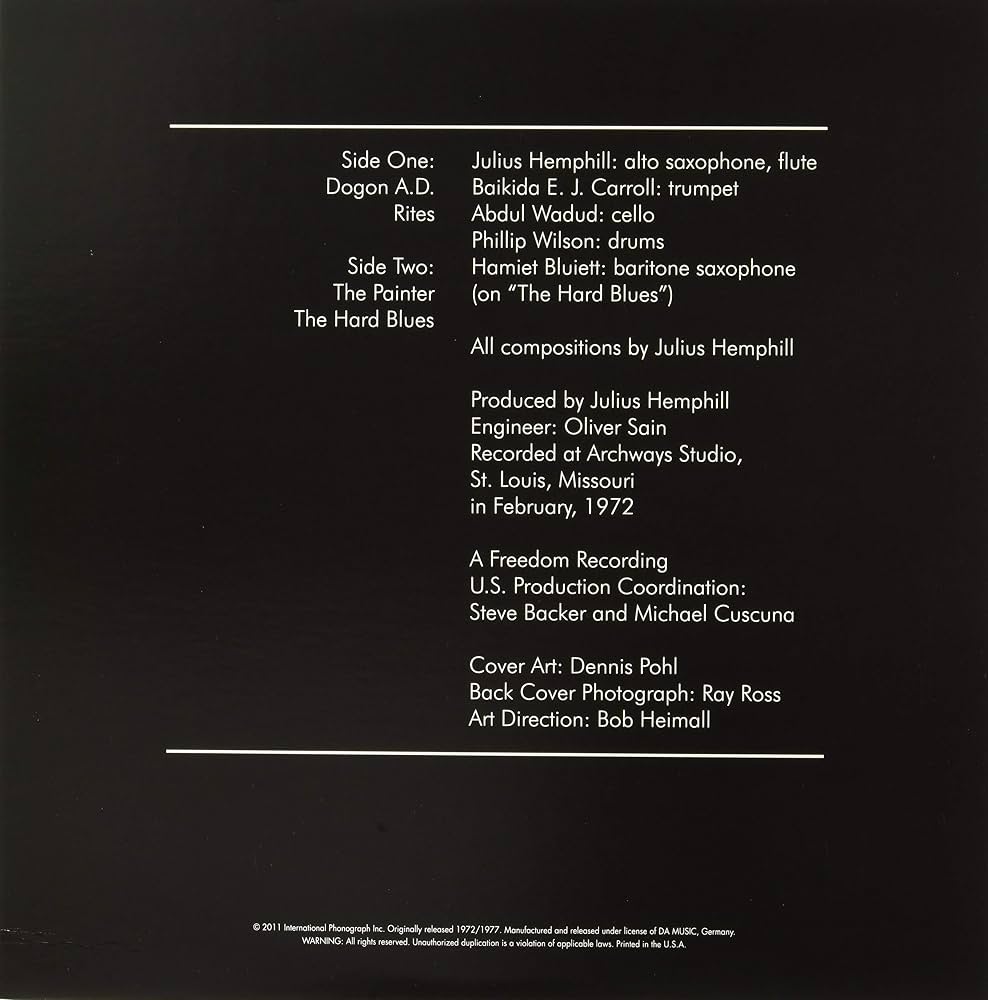
La formazione insolita del quartetto contribuì all’impresa, l’assenza del contrabbasso permette infatti al violoncello di Abdul Wadud di occupare uno spazio ibrido, muovendosi tra riff blues ostinati e graffianti pizzicati, mentre la batteria di Philip Wilson disegna un funk ipnotico, una sorta di danza mantrica su cui svettano le linee incendiarie del sax di Hemphill e della tagliente tromba di Baikida Carroll.
La title-track, con il suo tempo in 11/8, rimane il manifesto dell’album, il punto in cui il legame tra le radici africane, i Dogon del Mali, ed il blues urbano di St. Louis si fondono in un suono unico, asciutto e profondamente black. Recuperare questo storico capolavoro significa restituire al canone americano un documento cruciale del Black Artists Group, unendo la ricerca d’avanguardia alla visceralità del blues. È il salvataggio di un’incisione che, per decenni quasi introvabile, torna ora a testimoniare la forza politica e ancor più spirituale dell’autonomia creativa nera. L’opera, suddivisa in 4 lunghe tracce, va ascoltata per intero e consente di apprezzare come gli sguardi futuribili più efficaci della storia del jazz non abbiano mai staccato i piedi dalla strada, dalla polvere del blues. Il ritorno di “Dogon A.D.” sotto l’egida di New World Records può essere visto come un atto di giustizia storica, visto che anche i protagonisti sono finiti in un ingiusto oblio. Prendiamo per esempio Baikida Carroll, trombettista free tutto d’un pezzo che per anni è passato al teatro creativo per poi far perdere le tracce, o come il batterista Philip Wilson, tra i membri fondatori dell’Art Ensemble of Chicago, ucciso a revolverate a New York nel ’92 per motivi rimasti misteriosi. Poche settimane dopo l’omicidio, nella primavera del ’92, l’intera comunità del creative jazz di Manhattan si riunì a New York per una maratona musicale di tributo e beneficenza. I proventi vennero destinati alla famiglia del batterista per coprire le spese funerarie. Sul palco salirono tra gli altri David Murray, Olu Darae Fred Hopkins…
Anche in Italia “Dogon” è stato amato, rivisto e celebrato, in particolare dai Roots Magic, formazione che porta avanti le stesse istanze musicali e poetiche, aggiornandole con formidabile verve, e che consigliamo di vedere assolutamente dal vivo.
Chi scrive ricorda anche con piacere una personale e dissacrante “Dogon” portata dal nostro multistrumentista Carlo Actis Dato con il suo quartetto ai tempi di Ankara Twist della Splasc(h).
Ed ecco una versione pianistica di uno dei migliori talenti in circolazione:

JULIUS HEMPHILL – Dogon A.D. – New World Records
Available formats: CD / LP
“If I have anything to contribute to this art form… it’s a voice of our culture. This is a voice right out of them cotton fields—this ain’t out of the conservatory. This is out of the neighborhood. And that’s where my impetus comes from… I have seen it from the bottom up.” — Julius Hemphill
In the pantheon of avant‑garde jazz, few records possess the aura of Dogon A.D. . Recorded in 1972 in St. Louis and originally released in a small run on the Mbari label, Julius Hemphill’s masterpiece is finally available again thanks to a necessary, philological reissue complete with a sumptuous accompanying booklet …
This is not a nostalgia project for grey‑haired wolves—at least not only that. It is better understood as the recovery of an album that helped redefine the very concept of creative jazz, because in the midst of the free‑jazz ferment Hemphill had the intuition to anchor expressive freedom to an ancestral rhythmic pulse, and to set fire to everything—almost literally. Hard Blues, to put it succinctly, just like the title of the final track of this mythical session .
The quartet’s unusual lineup contributed decisively to the achievement. The absence of double bass allows Abdul Wadud’s cello to occupy a hybrid space, moving between obstinate blues riffs and abrasive pizzicatos, while Philip Wilson’s drums sketch a hypnotic funk—a kind of mantric dance over which Hemphill’s incendiary sax lines and Baikida Carroll’s sharp trumpet soar .
The title track, with its 11/8 meter, remains the album’s manifesto: the point where the link between African roots—the Dogon of Mali—and the urban blues of St. Louis merges into a unique, stripped‑down, profoundly Black sound .
Recovering this historic masterpiece means restoring to the American canon a crucial document of the Black Artists Group, uniting avant‑garde research with the visceral force of the blues . It is the rescue of a recording that, for decades nearly impossible to find, now returns to testify to the political—and even more spiritual—power of Black creative autonomy
The work, divided into four long tracks, must be listened to in full. It allows us to appreciate how the most effective forward‑looking visions in jazz history never lifted their feet from the street, from the dust of the blues .
The return of Dogon A.D. under the aegis of New World Records can be seen as an act of historical justice, given that even its protagonists have fallen into undeserved oblivion. Take Baikida Carroll, a tough, uncompromising free trumpeter who spent years in creative theater before disappearing from view; or drummer Philip Wilson, one of the founding members of the Art Ensemble of Chicago, shot to death in New York in ’92 for reasons that remain mysterious .
A few weeks after the murder, in the spring of ’92, the entire Manhattan creative‑jazz community gathered for a marathon tribute and benefit concert. The proceeds were given to Wilson’s family to cover funeral expenses. Among those on stage were David Murray, Olu Dara, and Fred Hopkins, among others .
Even in Italy, Dogon has been loved, revisited, and celebrated—particularly by Roots Magic, a group that carries forward the same musical and poetic principles, updating them with formidable verve. They are absolutely worth seeing live
 Tracce di Jazz
gran bella recensione, che sottolinea il carattere “earthy” ed emozionale di questo album, che tutti i veri jazzfans dovrebbero ascoltare, anche saltando per la prima volta lo steccato della c d. “avanguardia” senza remore e timori. Un’araba fenice che meritava finalmente una riedizione curata addirittura con amore. Imperdibile. Milton56
"Mi piace"Piace a 1 persona