
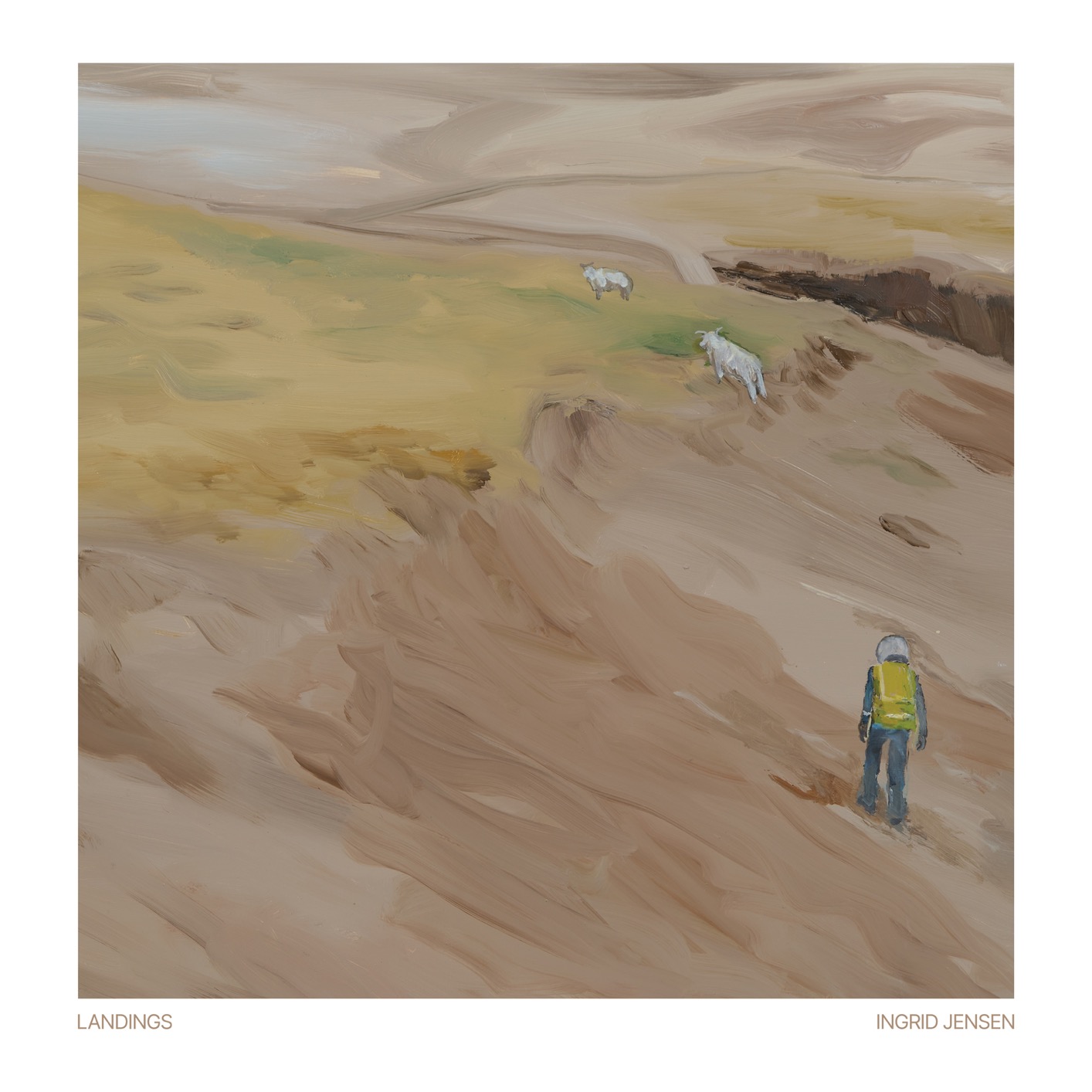
INGRID JENSEN – “Landings” Newelle Records – Supporti disponibili: CD/LP
Dopo decenni passati a sviluppare e ridefinire con acume svariate voci del vocabolario della tromba jazz moderna — dalle complesse architetture della Maria Schneider Orchestra al vigore collettivo delle Artemis — Ingrid Jensen sembra aver trovato in Landings una sorta di nuovo approdo spirituale. Il disco riflette la maturità espressiva di una musicista che merita di essere conosciuta come leader, una jazz-woman che, anche grazie a frequentazioni sempre di altissimo livello, ha da tempo barattato il virtuosismo fine a se stesso con una ricerca timbrica quasi scultorea.
Al centro di questo viaggio c’è la sua Monette, una tromba dal timbro scuro, denso e cremoso, che in apertura d’album incontra la leggenda vivente George Coleman in uno dei suoi temi più iconici: “Amsterdam After Dark”. A novant’anni compiuti, il sassofonista offre un cameo commovente, dando vita a un dialogo intergenerazionale in cui la Jensen accoglie il fraseggio autoritario e vissuto di Coleman nel proprio mondo lirico. L’abbraccio tra i due strumenti, che profuma di storia e rispetto reciproco, si snoda su uno screziato assolo di Coleman (visibile al minuto 3:00 del video) che funge da ponte ideale tra la tradizione hard-bop e il jazz contemporaneo.
Questo momento emozionante apre le danze, ma il cuore pulsante del disco si sviluppa altrove. In un lavoro di non facile catalogazione — che si muove con grazia tra la solarità in stile Blue Note e le atmosfere rarefatte tipiche di casa ECM —, la Jensen sviluppa un’intesa simbiotica con Gary Versace, fuoriclasse assoluto che ama lavorare dietro le quinte. L’organo Hammond B3 non è qui lo strumento ingombrante della tradizione soul-jazz, ma diventa un pavimento elastico e traslucido su cui poggia l’intera struttura armonica dei pezzi.
Senza mai sovrastare, Versace colora gli spazi con sensibilità quasi cameristica, dialogando con la chitarra di Marvin Sewell — altro nome da tenere in forte considerazione — e la batteria di Jon Wikan in un gioco di sofisticati incastri ritmici. Splendida la rilettura del classico di Carla Bley “Ida Lupino”, in cui la Jensen ricostruisce il tema in un’atmosfera sospesa e notturna, supportata dalle trame bluesy e sognanti della chitarra di Sewell. In episodi come la title track e la conclusiva “Home”, emerge la straordinaria capacità della leader di gestire le pause: ogni nota è pesata per la sua densità sonora, valorizzando il registro medio-grave e preferendo sempre l’impatto emotivo alla velocità tecnica.

INGRID JENSEN – “Landings” Newelle Records – Available formats: CD/LP
After decades spent shrewdly developing and redefining various voices within the vocabulary of modern jazz trumpet — from the complex architectures of the Maria Schneider Orchestra to the collective vigor of Artemis — Ingrid Jensen seems to have found in Landings a kind of new spiritual harbor. The album reflects the expressive maturity of a musician who deserves to be known as a leader, a jazz-woman who, thanks in part to always top-tier collaborations, has long since traded virtuosity for its own sake for an almost sculptural search for tone.
At the center of this journey is her Monette, a trumpet with a dark, dense, creamy timbre, which at the album’s opening meets living legend George Coleman on one of his most iconic themes: “Amsterdam After Dark.” At ninety years old, the saxophonist offers a moving cameo, giving life to an intergenerational dialogue in which Jensen welcomes Coleman’s authoritative, lived-in phrasing into her own lyrical world. The embrace between the two instruments, which carries the scent of history and mutual respect, unfolds over a richly textured Coleman solo (visible at the 3:00 mark in the video) that serves as an ideal bridge between the hard-bop tradition and contemporary jazz.
This emotional moment opens the dance, but the beating heart of the record develops elsewhere. In a work that resists easy categorization — moving gracefully between Blue Note-style brightness and the rarefied atmospheres typical of ECM —, Jensen builds a symbiotic understanding with Gary Versace, an absolute standout who loves working behind the scenes. Here the Hammond B3 organ is not the cumbersome instrument of soul-jazz tradition, but becomes an elastic, translucent floor supporting the entire harmonic structure of the pieces.
Never overpowering, Versace colors the spaces with an almost chamber-music sensibility, engaging in dialogue with Marvin Sewell’s guitar — another name well worth keeping in mind — and Jon Wikan’s drums in a play of sophisticated rhythmic interlocking. Splendid is the reinterpretation of Carla Bley’s classic “Ida Lupino,” in which Jensen reconstructs the theme in a suspended, nocturnal atmosphere, supported by the bluesy, dreamlike textures of Sewell’s guitar. In pieces like the title track and the closing “Home,” the leader’s extraordinary ability to manage silences comes through: every note is weighed for its sonic density, favoring the mid-low register and always preferring emotional impact over technical speed.

